All Categories
Featured

Decreasing Invasive Treatments with Advanced PDR Tech
Table of Contents
Maintaining the visual integrity of a high-end automobile in 2026 requires more than occasional washing and waxing. As automotive manufacturing techniques evolve, the methods used to repair minor imperfections have become increasingly specialized. Owners of exotic, luxury, and high-performance vehicles now look toward specialized paintless care standards as the benchmark for preserving both the aesthetic appeal and the long-term market value of their assets. This technical approach focuses on the manipulation of metal without compromising the factory finish, a process that has become essential as modern paint systems grow more complex.

The Evolution of Surface Integrity in 2026
Automotive finishes in 2026 have reached a level of complexity that traditional body shops often struggle to match. With the rise of multi-stage pearl finishes, matte clears, and self-healing ceramic-infused topcoats, the risk associated with sanding and repainting has never been higher. When a luxury vehicle sustains a minor dent or crease, the primary goal is to avoid breaking that factory seal. Repainting a single panel can lead to color-matching issues that are visible under certain lighting conditions, which immediately flags the vehicle during a professional appraisal. Specialized care standards prioritize techniques that massage the metal back to its original form from behind the panel.
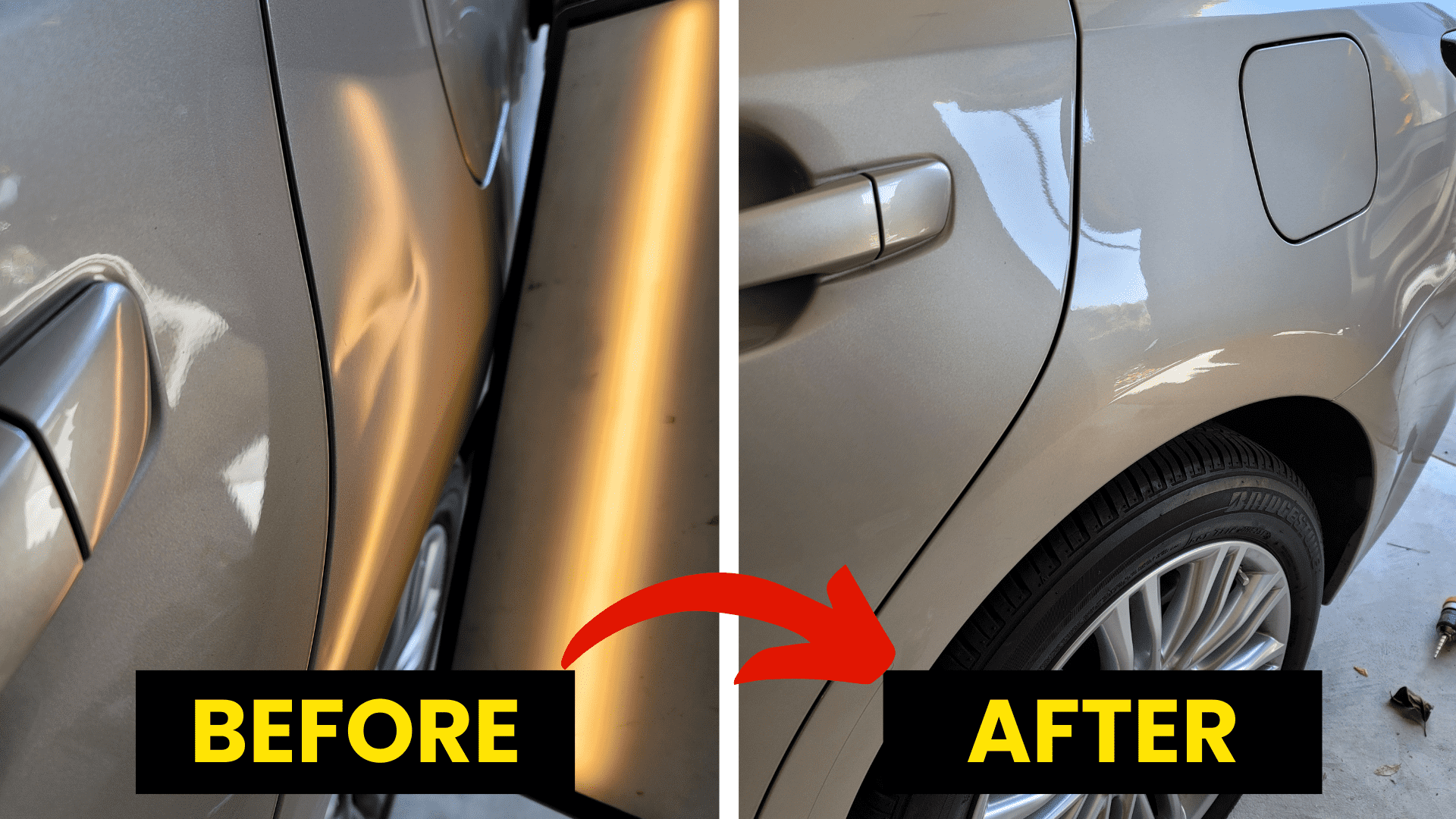
This methodology relies on a deep understanding of metallurgy. High-strength steels and lightweight aluminum alloys, common in 2026 vehicle architectures, possess specific "memory" characteristics. A technician must calculate the exact amount of pressure and heat required to coax the metal back into place without overstretching it. Using high-end paintless repair in Martinez involves a series of proprietary tools and high-intensity LED reflection boards that reveal even the slightest microscopic deviations in the panel surface.
Preserving Collector Value through Technical Precision
For collectors and enthusiasts, the "original paint" status is a significant factor in a vehicle's valuation. In the high-end secondary market, a car with original factory paint consistently commands a premium over one that has undergone traditional bodywork. This is because factory paint is applied in a controlled environment using electrostatic processes and high-heat curing that cannot be replicated in a standard repair facility. When owners invest in Efficiency Gains, they are essentially protecting the "birth certificate" of the vehicle's exterior.
The technical standards for luxury care now dictate that no fillers or bonding agents should be used for minor surface corrections. Fillers can shrink or crack over time, and they are easily detected by paint depth gauges used by savvy buyers and auction houses. By adhering to paintless standards, the thickness of the paint—measured in mils—remains consistent across the entire vehicle. This consistency is the first thing a professional inspector looks for when verifying the history of a luxury sedan or supercar.
Advanced Metallurgy and Panel Access
Modern vehicle design presents unique challenges for dent removal. The 2026 models often feature complex inner structures, acoustic dampening materials, and sensitive electronic sensors behind the body panels. Technicians must navigate these obstacles with surgical precision. Accessing the backside of a fender or door skin requires removing interior trim pieces or using specialized entry points that do not compromise the structural integrity or the quietness of the cabin. Many luxury owners now seek out Repair Efficiency Gains to ensure that these delicate internal components are handled by those with specific model knowledge.
Aluminum panels, which are prevalent in 2026 performance cars, require a different approach than traditional steel. Aluminum is less pliable and more prone to cracking if handled too aggressively. Specialized care involves the use of induction heating tools that stabilize the molecular structure of the aluminum during the repair process. This prevents the metal from becoming brittle, ensuring that the repair is permanent and invisible to the naked eye.
Lighting and Optical Perfection
The secret to high-level paintless care lies in the lighting. In 2026, specialized technicians use modular LED arrays that cast specific patterns of lines or shadows across the panel. By observing how these lines distort over a dent, the technician can identify the exact "high" and "low" points of the damage. This allows for a level of accuracy that was previously impossible. Every push of a tool from behind the panel is measured in fractions of a millimeter.
This optical precision is particularly important for crease repair. Creases are more difficult to remove than round dents because the metal has been "trapped" along a specific line. A standard repair might leave a slight wave or "ghost" of the original damage. However, the current standards for luxury care require a 100% flat finish. This is achieved through a combination of pushing from the back and "tapping down" from the front using polished resin or wood knockdown tools that will not mar the clear coat. Demand for Expert Shop Selection in CA has increased as more owners realize that these technical skills are far superior to traditional body filler methods.
Environmental and Structural Benefits

Beyond aesthetics and value, specialized paintless care is the most environmentally responsible way to maintain a vehicle. Traditional body repair involves volatile organic compounds (VOCs), sanding dust, and hazardous waste from paint thinners and primers. In 2026, as environmental regulations become stricter, the shift toward "green" repair methods is accelerating. Since no chemicals or new paints are used in the paintless process, it leaves a zero-carbon footprint in terms of material consumption.
From a structural standpoint, keeping the factory paint intact prevents future corrosion. The factory's E-coat—the primer layer applied via immersion—is a vehicle's primary defense against rust. Sanding into this layer during a traditional repair, even if repainted, often leaves the metal more vulnerable than it was before. Specialized care maintains this protective barrier, which is essential for vehicles located in coastal areas or regions where road salt is used.
The Standard of Professional Certification
As the complexity of luxury vehicles grows, so does the need for standardized certification. In 2026, the leading practitioners of specialized care are often certified by international organizations that test for both speed and, more importantly, accuracy. These technicians often undergo background checks and must show proficiency with various 2026 model types, including those with carbon fiber reinforced polymers (CFRP). While CFRP panels cannot be massaged like metal, specialized care standards also cover the removal of surface contaminants and minor scratches from these advanced materials using precision polishing techniques that do not remove excessive clear coat.
The role of a technician in this field is part artist and part engineer. They must understand the physics of energy transfer—how an impact at one point of a door can cause a "crown" or high spot six inches away. Dealing with these secondary tensions is what separates a standard repair from a luxury-grade restoration. The goal is always to return the metal to a state of total equilibrium, where no internal stresses remain to cause the dent to pop back in or deform under extreme temperatures.
Future-Proofing Vehicle Maintenance
As we move through 2026, the definition of "car care" continues to shift toward preservation rather than restoration. High-end owners are increasingly proactive, utilizing paint protection films (PPF) and ceramic coatings in conjunction with paintless dent removal. If a vehicle is protected by PPF, a skilled technician can often perform a paintless repair right through the film, saving the owner the cost of replacing the protective layer. This level of synergy between different car care disciplines is the new standard for the modern enthusiast.
Choosing the right level of care means understanding that a vehicle is an assembly of many specialized systems. The exterior skin is perhaps the most visible and vulnerable of these systems. By insisting on specialized paintless standards, owners ensure that their vehicles remain in "showroom" condition without the risks associated with traditional bodywork. In a market where every detail counts, the technical precision of these methods is the best way to ensure a vehicle stays as perfect as the day it left the assembly line.

Latest Posts

The Vital Function of Precision in Modern Damage Repair
The Role of Technical Training in High-end Vehicle Care

Making Sure Structural Integrity During Honda Dent Removal